


Moisture Transport
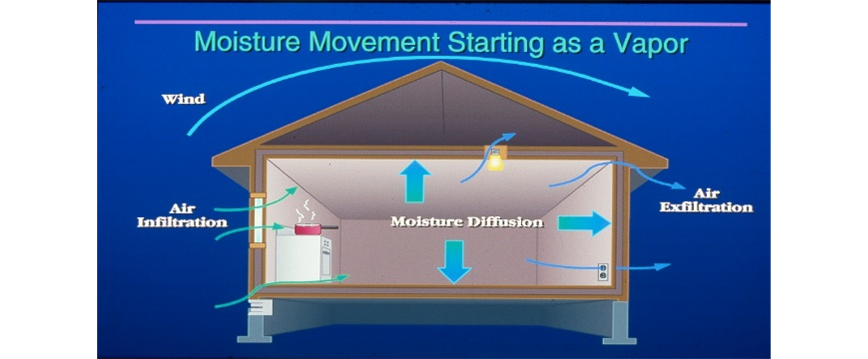
Moisture transport in buildings is a fundamental physics concept that can cause major failures in building enclosures, and other locations that are susceptible to mold and mildew damage. The source of moisture is typically bulk water, water vapor from humid indoor or outdoor conditions, moisture from the soil around a building, or leftover moisture in construction materials. Buildings can be protected from moisture failure if designed and operated properly.
Image
Curriculum
-
Remember
View Sources
Sources- Identify common signs of moisture problems in buildings
-
Identify the conditions for mold growth
 Lecture Notes
:
Common Signs of Moisture Problems
Lecture Notes
:
Conditions for Mold Growth
Lecture Notes
:
Common Signs of Moisture Problems
Lecture Notes
:
Conditions for Mold Growth
 Problem Set
:
Common Signs of Moisture Problems
Problem Set
:
Conditions for Mold Growth
Problem Set
:
Common Signs of Moisture Problems
Problem Set
:
Conditions for Mold Growth
-
Understand
View Sources
Sources- Explain the major causes of moisture damage in a building
-
Explain the difference between weather barriers and vapor barriers
Lecture Notes
:
Causes of Moisture in a Building
Lecture Notes
:
Weather Barrier vs. Vapor Barrier
Problem Set
:
Causes of Moisture Failure
Problem Set
:
Weather barriers vs. vapor barriers
-
Apply
View Sources
Sources- Apply best practice methods for controlling moisture
-
Correctly identify best practices to remove mold growth on lumber
Lecture Notes
:
Best Practices to Control Moisture
Lecture Notes
:
Correctly Mitigate Mold Growth on Lumber
Problem Set
:
Best Practice to Control Moisture
Problem Set
:
Proper Removal of Mold on Lumber
Teaching Materials
Image

Presentation
Image
Presentation
Image
Presentation
Image
Presentation
Image

Video
Image

Website
Image

Book
Image
Book
Image
Book
Image
Book
Image
Book
Image
Book
Image
Book
Image

Article/Report